
Shenzhen is a city that doesn’t fit into one story. In the same morning, you can stand inside a 1,700-year-old fortress and then watch a vendor in Huaqiangbei pull a fake smartphone from a drawer with a grin. That contrast is the point—and it’s exactly why we built two separate 72-hour guides.
The Classic Itinerary takes you through Nantou Ancient City, Dapeng Fortress, Xiaomeisha Beach, and Judiaosha Beach with exact routes, local restaurants, and hidden viewpoints. The Shopping Itinerary focuses on Huaqiangbei electronics, Shuibei jewelry, Nanyou wholesale fashion, and duty-free zones—with negotiation tips and quality-check shortcuts.
Every address is bilingual, every map pin opens in Amap, and every guide works offline. No more typing Chinese characters, no more guessing which bus to take. We’ve already made the mistakes so you don’t have to.
Instant digital download · Free Online support · Mobile-optimised
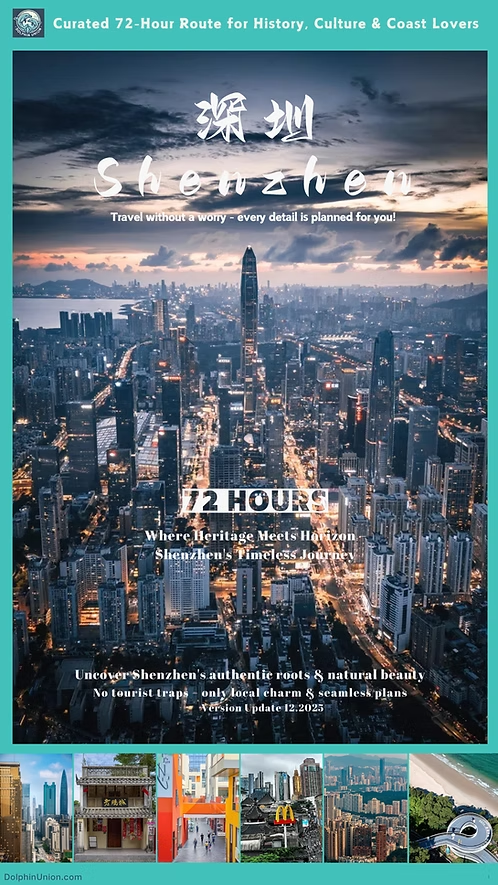
Tired of scattered Shenzhen travel tips? This 115+‑page PDF delivers fact‑checked 72‑hour Shenzhen itineraries with one‑click Amap navigation. Explore ancient fortresses, scenic beaches and authentic Cantonese‑Hakka food, built exclusively for international travellers.

Shop Shenzhen like an insider, not a tourist. This 80+‑page PDF delivers fact‑checked 72‑hour shopping itineraries for Huaqiangbei, Shuibei and Nanyou. Master wholesale bargaining, quality checks and market navigation with one‑click Amap links for independent international travellers.
Whether you’re here for history or hard bargains, these are the places that matter—and exactly which guide covers them.
Get a taste of our guide style before you buy. Pick any of the three free resources below.
Drones, robot restaurants, VR arcades, and more: seven hands-on high-tech experiences in Shenzhen that actually work for foreign visitors. Every listing includes the exact address in Chinese, Amap navigation, and whether you need to book ahead.
[Read the blog →]
Chinese holiday train tickets vanish in minutes—sometimes seconds. This practical guide shows you how to set up a 12306 account with a foreign passport, what to do when tickets are sold out, and the Trip.com backup tricks that locals actually use.
[Read the blog →]
Want to test our travel resources before ordering full city guides? Visit our dedicated page to download free China travel guide PDFs:
📥 9-City Preview Guide (Free PDF) – Sample Beijing travel routes and snapshots of Shanghai, Chengdu, Xi’an and other famous destinations
📥 China Travel Toolkit (Free PDF) – Must-know advice on mobile applications, cashless payment, translation solutions and internet connectivity for overseas visitors
Quick answers to the questions every visitor asks before booking.
March–May and October–December. Mild temperatures (18–28°C) and low rainfall. Avoid June–September (typhoon season) and Chinese national holidays (especially Oct 1–7) if you hate crowds.
Shenzhen’s metro is clean, cheap, and fully signposted in English. For the Dapeng Peninsula, take Line 2/8 to Xiaomeisha, then a taxi (about ¥130–150 from Futian). Shared bikes are easy via Hello Bike in Alipay. Our guides include exact exit numbers and taxi estimates for every route.
Most international visitors need a full Chinese visa. If you’re coming from Hong Kong, use Shenzhen Bay Port or Luohu Port—both connected to the metro. Some nationalities qualify for a 5-day Shenzhen Special Economic Zone visa on arrival, but check current rules before you fly. Our free Quick Start Guide covers this in detail.
Set up Alipay or WeChat Pay before landing. Link a Visa, Mastercard, or Wise card. Carry 300–500 CNY in cash for small stalls and street food, especially in markets where vendors may not accept foreign cards. Our guides include a cash-to-e-wallet workaround that takes two minutes.
You don’t need to speak Chinese to get around. But learning three phrases—多少钱? (how much), 可以便宜点吗? (can you make it cheaper), and 我要这个 (I’ll take this)—will change your market experience completely. Both guides include printable phrase cards.
Straight answers for travelers who don’t want to guess.
If you have three days and want a mix of history, beaches, and local food, get the Classic guide. If your main goal is to buy electronics, jewelry, or clothes at factory prices, get the Shopping guide. Many travelers buy both and use one for day trips and the other for market days.
Yes. Both are 72-hour plans, but they don’t overlap much. You could do the Classic route for two days and the Shopping route for one, or mix and match. We’ve designed them so transport between zones works in either direction.
In most wholesale markets, yes—bargaining is expected. In shopping malls and chain stores, no. The Shopping guide teaches you the right tone and phrases to negotiate without feeling awkward, and exactly when to walk away.
Yes, if you know what to look for. The ground-floor stalls near the entrance are the riskiest. Our guide shows you which buildings and floors are more reliable, and includes a simple fake detection checklist for phones, earbuds, and accessories.
Absolutely. Both guides are offline PDFs. Download them once on your phone or tablet, and they work everywhere—even inside market buildings where signal drops. The Amap pins still work if you preload the map area, or you can just show the address in Chinese to a local.
The easiest way is the high-speed train from West Kowloon to Shenzhen North or Futian (15–20 minutes). You can also take the MTR East Rail Line to Luohu or Lok Ma Chau, then walk across the border. Both options are covered in our free Quick Start Guide.
Shenzhen doesn’t make sense on paper. In 1980, it was a fishing village of 30,000 people. Today, it’s a global tech hub of over 17 million, home to Huawei, Tencent, and DJI. But walk ten minutes from the glass towers of Futian and you’ll find Nantou Ancient City, a 1,700-year-old walled town where stone streets twist past cafes, temples, and old Hakka houses. That’s the Shenzhen we want you to see—not the airport-to-conference-room version, but the messy, layered, real city that locals live in every day.
The classic 72-hour route takes you through that history. You’ll start in Nantou Ancient City, where we’d have you ignore the souvenir shops on the main lane and instead duck into the side alleys where shrines still burn incense and old men play cards. Then out to Dapeng Fortress on the coast, a Ming Dynasty military town built to defend against pirates. The South Gate at golden hour is one of the best photo spots in the city—stone walls glowing against the sea. After that, it’s beaches: Xiaomeisha for families and easy swimming, Judiaosha for wilder surf and fewer crowds. Along the way, you’ll eat. Dim sum in Shangmeilin, braised pork with taro at Pengcheng Restaurant, fresh seafood at Yongpeng Sea View. Our guide lists 44+ restaurants that don’t appear on TripAdvisor, all with bilingual names and Amap pins.
But Shenzhen is also a shopper’s paradise, and that’s a different trip entirely. Huaqiangbei is the world’s largest electronics market—a multi-building maze where one mall sells smartphone parts, another sells drones, and a third sells LED everything. The trick is knowing which floors to hit. The ground floor is where tourists get sold convincing fakes; the upper floors are where locals buy the real stuff at half the price. Our Shopping guide walks you through the exact buildings, with a negotiation script and a fake-detection checklist that will save you more than the price of the guide on your first purchase. Then there’s Shuibei, the world’s largest jewelry wholesale district, where gold is sold by weight and the labor fee is negotiable. And Nanyou, a 20-building fashion wholesale market where you can buy Korean-style coats and New Chinese dresses for the price of a fast-fashion t-shirt in Europe. Add in Zhongying Street’s duty-free zone and a luxury vintage warehouse, and you have a shopping itinerary that pays for itself.
Both guides are built for foreign visitors who don’t read Chinese, don’t have a Chinese bank card, and don’t have time to waste. Every location has a bilingual address and a clickable Amap pin. Every payment step is explained with screenshots. Every hotel recommendation comes with a Chinese address to show the driver. And if something goes wrong—a market closes, a bus stops running—you can message us on WhatsApp or WeChat and we’ll help you replan in real time. That’s the support we wish we’d had when we first landed in Shenzhen.
Shenzhen isn’t a city you check off a list. It’s a city you learn to navigate, one insider tip at a time. Whether you’re here for the fortresses or the bargains, we’ve done the legwork so you can spend your 72 hours actually experiencing the city, not staring at a map.
Keep your South China journey going with these two nearby stops.
Why go: China’s third-largest city and the birthplace of Cantonese food. Dim sum, colonial architecture on Shamian Island, and the Canton Tower skyline. It’s the most common transit hub for international flights into South China.
Best for: Food lovers, history buffs, and anyone who wants a slower, more traditional contrast to Shenzhen’s tech rush.
Travel tip: Take the high-speed train from Shenzhen North to Guangzhou South (about 30–40 minutes). Book at least one day ahead. If you have 4+ hours, visit the Chen Clan Ancestral Hall for the best traditional Cantonese architecture and craft exhibits.
Explore Guangzhou Guides →
Why go: A landscape of limestone karst peaks, the Li River, and the Longji Rice Terraces. It’s the postcard version of rural China, with bike rides through Yangshuo and bamboo rafts on the Yulong River.
Best for: Nature lovers, photographers, and anyone seeking a complete change of pace after Shenzhen’s urban intensity.
Travel tip: Fly from Shenzhen to Guilin (about 1.5 hours) or take a high-speed train (about 3–3.5 hours). Spend at least three nights—one in Guilin city, two in Yangshuo. Visit April–May or September–October for the best weather and scenery.
Explore Guilin Guides →