
Jiuzhaigou is not the kind of place you wander into and figure out on the spot. Tickets are online-only and sell out. The shuttle bus system assigns you a random route, so you can end up at the wrong valley and waste hours backtracking. The altitude hits harder than you think, and the scenic area is over 50 km long with no clearly marked “best route” for foreign travelers.
That’s why this guide is built for logistics, not inspiration. You’ll get a complete route sequence with bus numbers, exact ticket booking deadlines, altitude medication tips, and hotel picks tested on the ground. No pretty filler—just the answers you need when you’re standing at Nuorilang Transfer Center with a headache and a dead phone.
It’s a downloadable PDF, so you can use it offline anywhere in the valley. Download once, follow it step by step, and skip the stress.
Instant digital download · Free Online support · Mobile-optimised
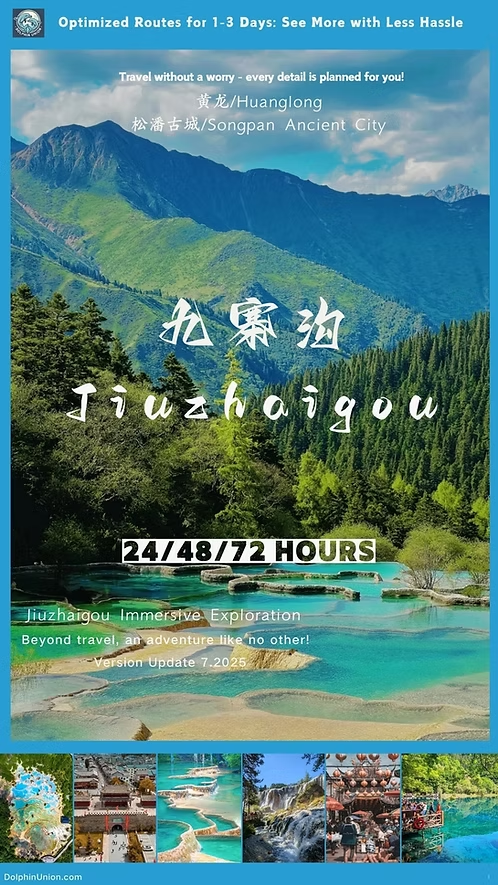
Field-tested Jiuzhaigou PDF itinerary for foreign independent travelers. Solve altitude sickness, random shuttle bus assignment and sold-out ticket problems for your western China trip. Includes 1/2/3-day route plans, Huanglong cable car tips, hotel picks near the park entrance, Tibetan food map and clickable Amap navigation links.
Nearby Highlights (included in 2-day and 3-day itineraries)
A practical orientation guide covering valley layout, ticket booking steps, route sequences, and essential Chinese phrases—perfect for first-time foreign visitors.
[Read the blog →]
Learn how the random bus assignment works, how to read bus numbers, and simple Chinese phrases to tell the driver where you want to go.
[Read the blog →]
Want to test our travel resources before ordering full city guides? Visit our dedicated page to download free China travel guide PDFs:
📥 9-City Preview Guide (Free PDF) – Sample Beijing travel routes and snapshots of Shanghai, Chengdu, Xi’an and other famous destinations
📥 China Travel Toolkit (Free PDF) – Must-know advice on mobile applications, cashless payment, translation solutions and internet connectivity for overseas visitors
Mid-to-late September for autumn colors and manageable crowds. May after Labor Day is also good—lower prices and clear lakes. Avoid Golden Week (early October) and summer weekends if you can.
From Chengdu, take the high-speed train to Huanglong Jiuzhai Station (about 1.5–2 hours), then a 2.5-hour shuttle bus to the valley entrance. Alternatively, fly to Jiuzhai Huanglong Airport (about 1 hour), but note that altitude adjustment starts immediately. Inside the park, all travel is by shuttle bus plus walking—no private cars allowed. To reach Huanglong or Songpan, public buses and private transfers are available; the guide lists exact options and departure times.
Most foreign travelers can use the 30 days or 240-hour transit visa-free policy if arriving via Chengdu or other major hubs. If you plan to fly directly to Jiuzhai Huanglong Airport from outside China, check whether you need a full tourist visa. Always confirm the latest policy with your airline.
A: Yes, but it’s a long day. Take the 6:45 AM high-speed train, arrive Huanglong Jiuzhai by 8:24 AM, shuttle to the valley by 11:00 AM. You’ll have 6–7 hours inside the park, which is enough for Five-Flower Lake and Pearl Shoal. Last train back leaves at 21:31 PM.
A: Start taking Rhodiola rosea one week before. Drink water constantly. Buy a portable oxygen can at the gate (¥20–30). Walk slowly, especially uphill at Five-Color Pond and Huanglong. If you feel dizzy, stop and breathe deeply.
A: Absolutely. Tickets are online only, with no on-site sales. Peak season daily limit is 41,000, but actual tickets released are often 30,000–35,000. Book at least 6 days ahead through the official platform. The guide includes direct booking links.
A: Yes. The 2-day itinerary includes a full-day trip to Huanglong National Park, with cable car booking tips and the best walking route to see the travertine pools without exhausting yourself. The 3-day itinerary adds Songpan Ancient City, including local food spots and how to get there by bus.
A: Mid-to-late September for autumn colors and manageable crowds. May after Labor Day is also good for lower prices and clear lakes. Avoid Golden Week and summer weekends if possible.
A: Yes. Every address is bilingual, every route includes Amap links, and all payment, language, and logistics solutions are explained step by step.
My first Jiuzhaigou trip was a mess. I flew into Chengdu, took the 6:45 AM train, arrived at Huanglong Jiuzhai Station by 8:24 AM, and then stood in the shuttle bus queue for an hour because I didn’t understand the random bus assignment. I got sent to Shuzheng Valley when I wanted Five-Flower Lake, wasted three hours backtracking, and nearly missed the last return train. My head was pounding at 3,100 meters, and I only had one oxygen can left.
That’s exactly why I built this guide—not a pretty picture book, but a step-by-step survival kit for real travelers on short Western China adventures. You’ll find the exact bus number ranges and what they mean, the ticket booking deadlines that most people miss, and the altitude routine that actually works. I’ve also included three ready-to-use itineraries: a 24-hour blitz, a 48-hour deep dive that pairs Jiuzhaigou with Huanglong’s travertine terraces (cable car up, hike down, and where to buy your ticket before the daily 5,000 limit sells out), and a 72-hour cultural route that adds Songpan Ancient City—Ming Dynasty walls, Tibetan butter tea, yak meat hotpot, and a quiet old-town atmosphere that most tour groups skip. Each itinerary tells you where to get off, how long to walk, and what to do if the bus drops you somewhere unexpected.
You don’t need another article gushing about turquoise lakes. You need the answer to “Which bus do I take next?” and “Where can I buy oxygen right now?” This guide gives you that, plus the exact hotel addresses, local Tibetan food spots, and direct booking links you’d otherwise spend hours digging for. All in a PDF you can read offline, even when data is spotty near the valley.
Why go: Sichuan’s laid-back capital, famous for giant pandas, spicy hotpot, and teahouse culture. The main gateway to Jiuzhaigou and Western Sichuan.
Best for: Food lovers, panda fans, and first-time visitors who want a soft landing before heading into the mountains.
Travel tip: From Chengdu, take the high-speed train to Huanglong Jiuzhai or fly to Jiuzhai Huanglong Airport. Spend at least one day in Chengdu for the panda base and a proper hotpot dinner.
Explore Chengdu Guides →
Emeishan
Why go: One of China’s Four Sacred Buddhist Mountains, with misty peaks, ancient temples, and the famous Golden Summit. A UNESCO World Heritage site with hiking trails and sunrise views.
Best for: Hikers, culture seekers, and anyone who wants a mountain experience that’s easier to reach than Jiuzhaigou.
Travel tip: From Chengdu, take a high-speed train to Emeishan (about 1.5 hours). Stay overnight near the summit to catch sunrise and avoid the worst crowds.
Explore Emeishan Guides →