
Harbin doesn’t do winter by halves. It builds ice palaces the size of apartment blocks, sells popsicles as street food in -20°C, and pairs Russian onion domes with steaming pots of braised goose. Most people come for Ice and Snow World, and they should—but the real difference between a good trip and a frozen disaster is knowing the small stuff: which ski slope suits your level, where the free ginger tea huts are, and why you should book Yabuli train tickets two weeks ahead.
This guide is built for first-time China visitors who want that local-level detail without spending 40 hours cross-checking Chinese apps. It covers Harbin’s cultural core (St. Sophia Cathedral, Central Avenue, Lao Daowai), the big winter draws (Ice and Snow World, Sun Island, Yabuli, Snow Town), and the hidden corners (Volga Manor, Gogol Street, Unit 731 Memorial Site). Every address is bilingual, every ticket link is pre-checked, and the whole PDF works offline.
We tested the routes in January, waited for the buses to Snow Town, and came back with frozen fingers to rewrite the cold-weather checklist until it actually worked. This is the guide we wished we’d had before our first Harbin winter.
Make your Harbin winter journey seamless with:
Glide through glowing ice castles, carve through powder on Yabuli’s slopes, and savor frosty treats in a city where every snowflake tells a cross-cultural story.
Instant digital download · Free Online support · Mobile-optimised
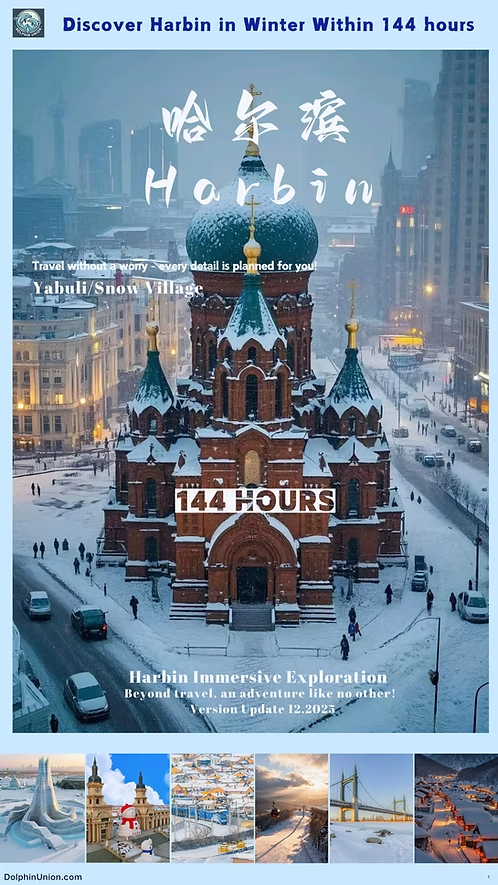
Perfect 144‑hour winter PDF travel guide for international visitors to Harbin. Featuring Ice and Snow World, Yabuli Ski Resort, Snow Town, one‑tap Amap navigation, cold‑weather survival hacks, local food picks and vetted accommodation tips.
The main event. Massive ice buildings lit from within, a 120m super slide, and temperatures that make your phone die faster than you’d expect. Go at 11:00 for daylight photos, stay for the 16:30 lantern lighting.
A red-brick Byzantine-style cathedral from 1907, now a photo icon and architecture museum. Golden hour turns the bricks warm orange. It was a warehouse before restoration—hard to believe when you see it.
The city’s pedestrian spine: cobblestones, Russian bakeries, and the Madier popsicle counter where eating ice cream in -20°C is a local tradition. The “bread brick” pavement dates to the 1900s and was nicknamed “silver dollars.”
China’s largest ski area, 3 hours from Harbin. Sunshine Resort for ski-in/ski-out convenience, Qingyun Town for beginners on a budget. After skiing, the alpine slide and forest hot spring are worth the trip alone.
A village of mushroom-shaped snowdrifts and wooden houses with kang heated-beds. It’s touristy, but at night with lanterns glowing it’s straight out of a fairytale. Go with a vetted guesthouse booking and low expectations for Wi-Fi.
Hundreds of Siberian tigers in a large reserve. Take the adventure vehicle (not the sightseeing bus) and buy a meat bucket to watch them leap against the cage. It’s raw, slightly uncomfortable, and unforgettable.
When the Songhua River freezes solid, it turns into Harbin’s biggest playground—ice slides, horse-drawn sleighs, ice bicycles, and locals doing winter swimming at -20°C. We share which activities are actually worth your time, where to rent gear without getting scammed, and how to stay safe on the ice if you don’t speak Chinese. Includes Amap pins and a few survival phrases for the ticket counters.
[Read the blog →]
Yes, you should try a Harbin bathhouse—and no, it’s not as scary as it sounds. We break down the full sauna-and-scrub ritual, what to bring, how much to tip, and which of Harbin’s best bathhouses have English-friendly staff. Includes Chinese phrases to communicate with your bath scrub technician and avoid awkward moments in the hot pool.
[Read the blog →]
Want to test our travel resources before ordering full city guides? Visit our dedicated page to download free China travel guide PDFs:
📥 9-City Preview Guide (Free PDF) – Sample Beijing travel routes and snapshots of Shanghai, Chengdu, Xi’an and other famous destinations
📥 China Travel Toolkit (Free PDF) – Must-know advice on mobile applications, cashless payment, translation solutions and internet connectivity for overseas visitors
Late December to early February is peak ice festival season. January has the most spectacular displays but also the harshest cold (-15°C to -30°C). If you want smaller crowds and still-solid ice, go in late February when local students are back in school.
Harbin Taiping International Airport (HRB) connects to major Chinese cities and several international routes. From the airport, the Airport Express bus or a Didi/Amap ride gets you downtown in about 40 minutes. High-speed trains from Beijing take 5–6 hours to Harbin Station. Inside the city, Central Avenue and St. Sophia are walkable. For Yabuli and Snow Town, use the guide’s dedicated transit schedules—public buses exist but are confusing in winter.
Harbin is covered by China’s 144-hour visa-free transit policy for eligible nationalities. You can enter via Harbin Taiping Airport and stay in Heilongjiang Province for up to six days without a visa, as long as you have an onward ticket to a third country. Always confirm your eligibility with your airline before departure.
Yes. Tickets open 15 days ahead and sell out fast during peak winter season. The guide includes step-by-step booking instructions and the exact release time for reservations each year.
High-speed trains run from Harbin Station to Yabuli West, taking about 69–87 minutes. There are only three daily departures in winter, so book at least 14 days in advance. The guide includes exact schedules, station maps, and a private car comparison.
Late December to early February is peak season, with January offering the most spectacular ice displays. Temperatures range from -15°C to -30°C. The guide includes a month-by-month weather and crowd rating table.
Use the 3-layer system: moisture-wicking base, insulating mid-layer, and windproof outer shell. Don’t forget waterproof boots, thermal insoles, wool socks, a hat that covers ears, and insulated gloves. The guide includes a full packing checklist with gear rental links.
Absolutely. With the right plan, six days is enough to cover Harbin’s top attractions, Yabuli skiing, Snow Town, and a few hidden gems. The guide includes flexible itineraries for arrival day, Day 1 through Day 5, and leaving day.
Yes—Sun Island Snow Expo is generally less crowded but equally impressive, with massive snow sculptures and over 20 free activities. Volga Manor is another serene option with Russian architecture and snow tubing.
Harbin is a city built on contradictions. It’s home to China’s most famous ice festival and its coldest winters, yet it also has a warm, almost European café culture along Central Avenue. Russian Orthodox domes share the skyline with Soviet-era apartment blocks, and the local dialect is a mix of Mandarin, Russian loanwords, and northeastern bluntness. You can eat borscht in a century-old cellar, then walk two blocks and find a street vendor selling candied hawthorn sticks frozen solid.
The city’s Russian roots go back to the 1898 construction of the Chinese Eastern Railway, when Russian engineers and merchants turned a small fishing village into a trading hub. That legacy lives on in St. Sophia Cathedral, the bread-brick pavement of Central Avenue, and the old Harbin dialect, which still uses words like “lieba” (bread) and “weideluo” (bucket). But Harbin is not a museum piece—it’s a sprawling northeastern Chinese city with a population of over 9 million, where winter markets sell frozen pears and live carp, and the local cuisine leans heavily on stews, smoked meats, and fermented cabbage.
For travelers, Harbin is best known as the home of the Harbin International Ice and Snow Sculpture Festival, which transforms the city into a glowing winter wonderland from late December to late February. The main venue, Ice and Snow World, covers over 600,000 square meters and uses more than 100,000 cubic meters of ice blocks cut from the Songhua River. It’s the kind of place that makes even jaded adults stop and stare. But beyond the festival, Harbin offers a surprising depth of experiences: the sprawling Siberian Tiger Park, the somber Unit 731 Memorial Site, the baroque lanes of Lao Daowai, and a food scene that rewards adventurous eaters with dishes like guobao rou (crispy sweet-and-sour pork) and disanxian (potato, eggplant, and pepper stir-fry).
The city’s winter climate is not to be underestimated. Temperatures regularly drop below -20°C, and the wind off the Songhua River can make it feel even colder. But that’s also part of the appeal—Harbin doesn’t apologize for its cold. It builds ice slides, sells popsicles on the street, and hosts winter swimming competitions in the frozen river. If you dress right and plan your days around the weather, the cold becomes part of the adventure rather than a barrier to it.
This guide is designed to help you navigate all of that. It’s not a fluffy travel blog recap or a recycled list of top 10 attractions. It’s a practical, field-tested plan for spending 144 hours in Harbin without wasting time, money, or body heat. Whether you’re skiing at Yabuli, watching tigers leap for meat, or warming your hands on a cup of hot kvass on Central Avenue, this guide will get you there.
Why go: China’s capital, where imperial palaces, hutong alleyways, and some of the country’s best Peking duck sit side by side. Famous for the Forbidden City, the Great Wall, and a cultural depth that anchors any China trip.
Best for: First-time visitors who want to see China’s biggest landmarks, history buffs, and foodies hunting for authentic roast duck and old-school breakfast markets.
Travel tip: Book Forbidden City tickets online at least 7 days ahead—they sell out weeks in advance during peak season. Visit the Mutianyu section of the Great Wall on a weekday to avoid the worst crowds.
Why go: A dazzling mix of Art Deco skyline, French Concession lanes, world-class museums, and some of China’s best dining. Famous for the Bund, Yu Garden, and a pace that never slows down.
Best for: First-time China visitors who want a soft landing, foodies, architecture buffs, and anyone who enjoys big-city energy with pockets of old Shanghai charm.
Travel tip: Use the metro to avoid surface traffic. Book the Shanghai Museum (East) free ticket online up to 7 days ahead—it sells out fast on weekends.