
My first eastern China multi-city trip was a mess — I crammed Hangzhou into 2 rushed days, missed the best sunset light at Leifeng Pagoda, and wasted hours backtracking across West Lake because I followed a generic online map. If you’re planning a Shanghai–Suzhou–Hangzhou loop, you’re probably staring at the same problems: West Lake is enormous, train connections feel stressful when you can’t read Chinese, and you’re never quite sure which temples need advance booking or which gates are actually free to enter.
This 3-Day Hangzhou & West Lake Itinerary is the fix. It’s built from our 2026 Hangzhou 96‑hour PDF guide — the same route logic I use when I bring first‑time visitors to the city. You’ll get exact train times, walking distances, ticket prices, restaurant streets, and a day‑by‑day plan that doesn’t double back on itself. If you’re using Hangzhou as one stop inside a longer multi‑city eastern China trip, I’ve also included the intercity transport section at the end so you can slot this plan straight into your own multi‑city China trip planner.
Is 3 days enough for Hangzhou & West Lake?
Yes — three full days is the sweet spot for an independent traveler who wants to see the classic lake sights, one major temple, and a slice of old canal‑town Hangzhou without sprinting. You won’t see everything, and you shouldn’t try to.
Day 1 covers the must‑do West Lake loop. Day 2 goes deep into temple and tea‑country Hangzhou. Day 3 escapes the lake entirely and follows the Grand Canal through the older, slower side of the city. Total walking is high but manageable — around 8–10 km per day.
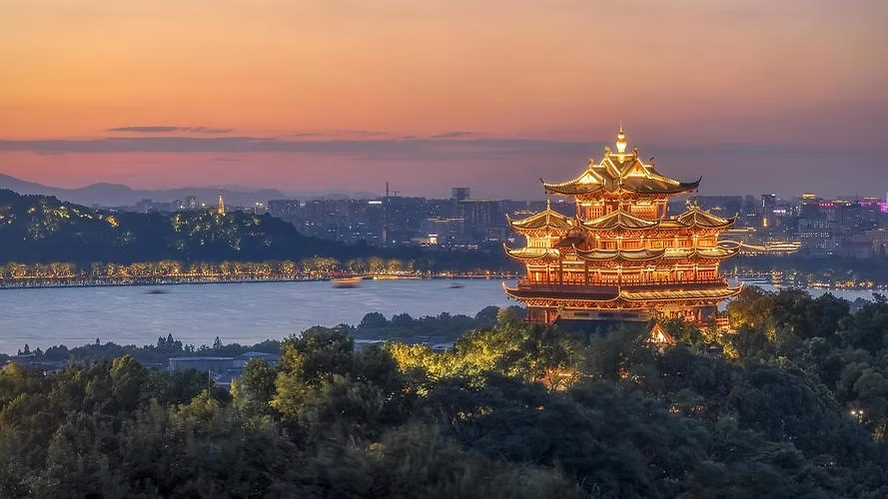
Who this 3‑day itinerary is perfect for
- Travelers building a multi‑city eastern China route (Shanghai → Suzhou → Hangzhou, or the reverse).
- First‑timers who want a structured, tested Hangzhou West Lake 3 day itinerary without joining a tour group.
- Independent visitors who prefer public transport, free parks, and street food over private transfers.
- Anyone who tried to plan West Lake before and gave up because the park is too big and the maps don’t match.
Who should pick a shorter day trip or longer 4–5 day deep dive
- Day trip from Shanghai: Only works if you accept you’ll see the northern half of the lake, maybe one boat ride, and Leifeng Pagoda. It’s rushed, but doable with the first morning train and last evening return.
- 4–5 day deep dive: Choose this if you want to add Xixi Wetland, Liangzhu Ancient City, more tea‑village time, or a water town side trip like Wuzhen. Three days is enough for the core; five days turns Hangzhou into a slow‑travel base.
- If Hangzhou is your only China stop: You can still use the 3‑day plan, but add a fourth day for lingering around the lake and a fifth for a nearby water town. Our 96‑hour PDF guide includes a leaving‑day option list that works perfectly for this.
Best time to visit Hangzhou for a 3‑day trip
Spring (March–May) and autumn (September–November) are the best windows. Daytime temperatures sit between 15–25°C, the lake is calm in the early morning, and you can walk for hours without heat exhaustion. April and October are the most photogenic months, but they also bring the largest domestic crowds.
Summer (June–August) is hot, humid, and often above 35°C by 10:00 AM. Afternoon thunderstorms are frequent. If summer is your only option, start each day at 6:30–7:00 AM, finish outdoor walking before noon, and plan indoor breaks (museums, teahouses) during the worst heat.
Winter (December–February) is quiet and misty, with temperatures around 0–8°C. Most outdoor sights stay open, but some boat services run shorter hours. Snow over Broken Bridge is a classic photo scene, but it’s rare and unpredictable.
Holidays to avoid if you can:
- Chinese New Year (late January–mid February)
- Labour Day holiday May 1–5
- National Day Golden Week October 1–7
During these periods, Su Causeway becomes shoulder‑to‑shoulder, and Lingyin Temple can have 2–3 hour waits just to light incense. Lingyin Temple reservation slots often sell out 3–5 days in advance during Golden Week — if you’re travelling over a major holiday, book before you leave home.
Lotus season guide for West Lake:
- Late May to mid‑June – early buds, fewer tourists, soft misty lake views.
- Mid‑July to mid‑August – peak full bloom, the famous “endless green lotus leaves” scenery, but high heat and peak domestic crowds.
- Late August to early September – flowers fade but the green lotus leaves and seed pods make for quieter, moodier lakeside walks.
If you’re travelling specifically for lotus photos, aim for early morning in mid‑July and go straight to Quyuan Lotus Garden before 8:00 AM.
Your 3‑Day Hangzhou & West Lake Itinerary (from our 2026 PDF guide)
This is the exact route I use every time I drag friends through Hangzhou — no backtracking, no missed sunsets. Each day is ordered so you move in one direction and don’t cross the lake twice.
Day 1: West Lake Classic Full Loop
Total walking: ~8 km. One boat ride. This is the classic postcard day.
Morning (8:00 AM – 12:00 PM)
Start at Hubin Road near Longxiangqiao Metro Station (Line 1). Walk north along the lake to Broken Bridge (Duanqiao) — free, no ticket. Cross Bai Causeway (1 km, 30 min), pass Lonely Hill (Gushan), and stop at Xiling Seal Society and Zhongshan Park (both free). From Gushan, continue south to the Su Causeway entrance.
Midday (12:00 – 2:00 PM)
Walk the first two sections of Su Causeway (about 1.2 km), then exit into Huagang Park (free). From Huagang Pier, board the classic West Lake cruise boat to Three Pools Mirroring the Moon on Xiaoyingzhou Island. The ticket is ¥55 adult, includes island landing, and boats run every 15–20 minutes from 8:00 AM to 4:00 PM. Spend 30–40 minutes on the island.

Afternoon (2:00 – 5:00 PM)
Boat back to Huagang Pier, then walk north to Leifeng Pagoda (¥40, open 8:00–19:00). This is the best sunset viewpoint on the lake — go up one hour before golden hour if you can. After the pagoda, continue to Quyuan Breeze Lotus Garden (free) for a quieter end to the afternoon.
Evening (6:00 PM onward)
Dinner at Wulin Night Market — a lively open‑air food street near the lake. Try grilled squid, jianbing, tanghulu, and cheap local beer. It’s about a 15‑minute walk from the northern lake shore.
Day 2: Lingyin Temple & Longjing Tea Country
Total walking: ~6–7 km, plus short taxi/bike hops. Start early.
Morning (7:30 AM – 12:00 PM)
Take Metro Line 1 to Longxiangqiao, then bus 7 / 807 or a taxi to Lingyin Temple. Arrive before 8:30 AM to avoid the tour bus flood. The combined visit covers Feilai Peak Grottoes (¥45) and Lingyin Temple incense ticket (¥30) — total ¥75. Reserve online at least 1 day in advance on weekends and during peak season. Allow 2–3 hours for the grottoes, the temple halls, and the surrounding bamboo paths.
Midday (12:00 – 2:00 PM)
Taxi or bike to Longjing Village (about 15 minutes). Walk the Longjing tea terraces for free, then visit the China National Tea Museum — free, closed Mondays. Have lunch in the village; several small family‑run restaurants serve tea‑country dishes like clay‑pot chicken and wild vegetable stir‑fries. Don’t buy tea inside Longjing Village — prices are inflated for tourists.
Afternoon (2:00 – 5:30 PM)
Cycle or taxi to Nine Creeks Misty Woods (free), a network of streams and forest paths that feel far from the city. Then continue to Liuhe Pagoda (¥20, open 7:00–17:30) for a view over the Qiantang River and the historic steel bridge. End the afternoon at Bagua Tian Heritage Park (free), a geometric agricultural field laid out in the shape of the Eight Trigrams.
Evening (6:00 PM onward)
Head back toward the city centre for Hefang Street — touristy but convenient for sampling many traditional snacks in one walk. Go after 5:00 PM when the stalls are fully open.
Day 3: Grand Canal & Old Hangzhou Charms
Total walking: ~7–8 km. Mostly flat. This is the off‑the‑beaten‑path day.
Morning (8:20 AM – 12:00 PM)
Take Water Bus Line 1 from Wulinmen Pier (about ¥3–8 depending on distance). Ride north along the Grand Canal to Gongchen Bridge — a four‑hundred‑year‑old stone arch bridge and one of the best canal views in Hangzhou. Disembark and walk to the China Grand Canal Museum (free, closed Mondays, open 9:00–16:30). Spend an hour learning how the canal shaped eastern China’s trade and migration patterns.
Midday (12:00 – 2:00 PM)
Walk through Gongchen Bridge West Historic District — a preserved Qing‑dynasty street with fan and sword museums, teahouses, and artisan workshops. Continue to Xiaohezhi Historic Street, a quieter lane with Republic‑era houses and small cafés. Lunch around here is better than the tourist strip near the lake; look for small noodle shops and dumpling places.
Afternoon (2:00 – 5:30 PM)
Walk to Xiangji Temple (free, open 8:00–17:00), a rare temple dedicated to the Kitchen God — a curiosity even for Chinese visitors. After the temple, you have two good optional add‑ons depending on energy:
- Xixi National Wetland Park (¥80, boat rides from ¥100/hour) — allow 3–4 extra hours if you choose this.
- Liangzhu Ancient City (¥80, reserve in advance) — the 5,000‑year‑old archaeological site that rewrote Chinese history.
If you’re tired, skip both and rest your legs before dinner.
Evening (6:00 PM onward)
Dinner at Shengli River Gourmet Street — more local and less English‑friendly than Hefang Street, but excellent for late‑night crayfish, skewers, and cold beer. I still stop for crayfish at Shengli River every single trip — it’s become a ritual.
Multi‑city transport: connecting Hangzhou to Shanghai & Suzhou
Shanghai ↔ Hangzhou high‑speed train
Take a G‑class high‑speed train from Shanghai Hongqiao to Hangzhou East. The fastest services take 45–50 minutes. Second‑class seat: ¥73.
If you’re planning a Shanghai to Hangzhou 3 day trip, or a wider Hangzhou West Lake 3 day itinerary from Shanghai, the G‑class trains below are the backbone of your connection.
Example trains Shanghai → Hangzhou:
- G7301 departs Shanghai Hongqiao 07:00, arrives Hangzhou East 08:17
- G7317 departs Shanghai Hongqiao 09:00, arrives Hangzhou East 09:50
- G7371 departs Shanghai Hongqiao 13:30, arrives Hangzhou East 14:20
Example trains Hangzhou → Shanghai:
- Trains run until around 21:30. The last practical train for a same‑day return is G7390 departs Hangzhou East 21:00, arrives Shanghai Hongqiao 22:15.
Evening trains on weekends sell out. If you’re travelling Shanghai → Hangzhou → Suzhou, book all legs 1–2 weeks ahead, especially the Friday and Sunday slots.

Suzhou ↔ Hangzhou high‑speed train
The Suzhou–Hangzhou G‑train takes about 1 hour 20 minutes. Second‑class fare is roughly ¥100–110. There are fewer direct trains after 19:00, so plan your Suzhou departure for earlier in the day.
Multi‑city China trip planner tips
- Direction: Shanghai → Suzhou → Hangzhou works well because each leg is short and you avoid a long backtracking day.
- Bag storage: Major stations like Hangzhou East have left‑luggage counters if you want to arrive in the morning and leave at night without carrying your pack all day.
- Ticket pickup: Most stations accept e‑tickets with passport. You don’t need a paper ticket for high‑speed trains, but carry your passport because ID checks are mandatory.
Essential practical tips for independent travelers
Ticket rules: free vs paid attractions
West Lake itself is free. You can walk into Broken Bridge, Bai Causeway, Su Causeway, Gushan, Huagang Park, Quyuan Lotus Garden, and Xiling Seal Society without any ticket.
Paid attractions you’ll likely visit on this 3‑day plan:
| Attraction | Ticket | Notes |
|---|---|---|
| Three Pools Mirroring the Moon | ¥55 adult | Includes island landing and round‑trip boat |
| Leifeng Pagoda | ¥40 | Open 8:00–19:00 |
| Lingyin Temple & Feilai Peak | ¥75 total (¥45 + ¥30) | Reserve 1 day ahead on weekends/peak season |
| Liuhe Pagoda | ¥20 | Open 7:00–17:30 |
| Xixi Wetland (optional) | ¥80 | Boat rides from ¥100/hour |
| Liangzhu Ancient City (optional) | ¥80 | Reserve in advance |
Most free parks and museums do not need reservations, but some museums close on Mondays — check the day before you go.
Navigation: why Google Maps falls short and what to use instead
Google Maps is unreliable in mainland China: bus stops are misplaced, walking paths are wrong, and metro exit numbers often don’t match. For independent multi‑city travel, this is a real problem.
Use Amap (高德地图), the local navigation app. It works offline if you pre‑download the city map, and it gives accurate walking, metro, bus, and cycling directions. If you can’t read Chinese, switch it to English in the settings. Our Hangzhou PDF guide embeds Amap navigation links for every single stop — tap the link, and it opens the exact destination in Amap. That alone solves about 80% of the getting‑lost problem.
Payment: quick guide to setting up Alipay / WeChat Pay with foreign bank cards
Cash is nearly useless in Hangzhou. You need mobile payment. Both Alipay and WeChat Pay now accept foreign Visa, Mastercard, and Amex.
Setup takes about 5 minutes:
- Download Alipay.
- Register with your phone number.
- Tap “Add Card” and enter your foreign bank card.
- Verify with a one‑time bank code.
After that, you can pay for metro tickets, shared bikes, street food, temple tickets, and vending machines. Keep ¥200 cash as backup, but you’ll rarely touch it.
Packing & local etiquette tips
- Walking shoes — you’ll cover 8–10 km per day.
- Light rain jacket — especially April–June and September.
- Power bank — your phone drains fast when you’re navigating and photographing.
- Reusable water bottle — free drinking fountains are rare; buy water cheaply from convenience stores before entering the lake area.
- Temple etiquette — Lingyin Temple is a working monastery. Cover shoulders, keep your voice down, and don’t point at statues with your finger.
- Don’t feed the fish in West Lake ponds — it’s taken seriously by local staff.
Local Hangzhou food you can’t miss
Hangzhou food is delicate, slightly sweet, and completely different from Sichuan or Hunan cuisine. These dishes are worth ordering:
- Dongpo Pork – braised pork belly in soy and sugar, melt‑through texture.
- West Lake Vinegar Fish – whole fish in a glossy sweet‑sour vinegar sauce. Order it from a mid‑range restaurant; cheap versions are often disappointing.
- Longjing Shrimp – river shrimp stir‑fried with fresh Longjing tea leaves.
- Pian’er Chuan – Hangzhou’s local noodle soup with sliced pork, bamboo shoots, and pickled greens. This is the breakfast dish you’ll find in small neighbourhood shops.
Food streets to try:
- Hefang Street – touristy but efficient for sampling many snacks in one walk.
- Shengli River Gourmet Street – local late‑night skewers, crayfish, and cold beer.
- Wulin Night Market – open‑air street food near the lake, great for first‑evening energy.
Tourist trap warning: Avoid any restaurant with a “West Lake view” terrace and a picture menu printed in six languages. Those places charge 50–100% more for the same dishes. Walk two blocks inland, and you’ll eat better for half the price.
Frequently Asked Questions
Q1: Is West Lake Hangzhou free to enter?
Yes, West Lake itself is completely free, including Broken Bridge, Bai Causeway, Su Causeway, Gushan, and most lakeside parks. You only pay for specific experiences like boat rides to Three Pools Mirroring the Moon (¥55) or Leifeng Pagoda (¥40).
Q2: How long is the high-speed train from Shanghai to Hangzhou?
The fastest G‑class trains take 45–50 minutes from Shanghai Hongqiao to Hangzhou East. A typical second‑class ticket costs ¥73. The first useful train for a day trip departs around 07:00, and the last practical return train leaves Hangzhou East at 21:00.
Q3: Is 3 days enough for Hangzhou and West Lake?
Yes. Three full days lets you do the classic lake loop on Day 1, Lingyin Temple and tea country on Day 2, and the Grand Canal side of Hangzhou on Day 3. You won’t see everything, but you’ll see the right things in the right order without rushing.
Q4: How do I plan a multi‑city eastern China trip including Shanghai, Suzhou and Hangzhou?
Start with 2–3 nights Shanghai, then take the high‑speed train to Suzhou (30 min), spend 1–2 nights, then continue to Hangzhou by G‑train (1 hour 20 min) and spend 3 nights. This creates a natural westbound loop with no backtracking. Book train tickets 1–2 weeks ahead, especially on weekends.
Q5: Do I need to book Lingyin Temple tickets in advance?
For weekends, public holidays, and March–May / September–November, yes — reserve online at least 1 day ahead. International visitors can reserve through the official WeChat account. Walk‑up tickets are sometimes available on quiet weekdays, but don’t risk it in peak season.

Q6: Can I add Xixi Wetland or Liangzhu as a day trip to this 3‑day plan?
Yes, but only if you’re willing to borrow time from Day 3. Both sites need at least 3–4 hours. Xixi Wetland is closer to the city centre (taxi ~30 min), while Liangzhu is reachable by Metro Line 2 and then a shuttle bus. If you’re set on both, extend your Hangzhou stay to 4 days.
Q7: How much budget do I need for 3 days in Hangzhou?
A comfortable independent 3‑day budget:
- Accommodation: ¥300–600 per night (boutique hotel near West Lake)
- Food: ¥150–250 per day including snacks and a decent dinner
- Attractions + boat: ¥170–220 total
- Local transport: ¥30–50 per day
Excluding intercity trains, expect to spend ¥1,500–2,500 (about $210–350 USD) for 3 days without skimping. You can do it cheaper with hostel dorms and street food only.
Q8: Is Hangzhou easy to visit without speaking Chinese?
Moderately easy if you set up Alipay and Amap in English before arrival. Metro machines have English menus, major sights have bilingual signage, and tourist‑area restaurants usually have picture menus. Once you leave the city core, English drops fast. Having an offline guide with pre‑saved Amap links helps more than you’d expect.
Q9: Where can I find a reliable multi‑city China trip planner with offline PDFs and navigation links?
That’s exactly what our Hangzhou offline PDF guide is built for. It includes the full 96‑hour itinerary, turn‑by‑turn Amap navigation links that work offline, exact boat pier locations, restaurant recommendations, a tourist‑trap avoid‑list, and a packing checklist. For a broader eastern China route, our free China Travel Toolkit gives you the basic mobile payment, translation, and offline map setup every independent traveler needs.
Useful further Hangzhou & multi‑city travel resources
Planning a Hangzhou West Lake 3 day itinerary from Shanghai — or a full Shanghai–Suzhou–Hangzhou loop — doesn’t have to mean juggling ten browser tabs and praying Google Maps holds up. Our Hangzhou offline PDF guide compiles the whole 96‑hour plan in one place: day‑by‑day routes, exact boat pier locations, turn‑by‑turn walking routes, a restaurant avoid‑list, ticket reservation steps for every paid attraction, and a full packing checklist. It’s the same route logic I use every time I go back.
If you’re travelling during peak season, don’t wait until you’re in China to prepare. Lingyin Temple slots sell out days ahead, evening return trains book up fast on weekends, and the best boat departures fill by mid‑morning. Grab the guide, save the Amap links, and set up Alipay before you board the train. Twenty minutes of prep now beats an hour of confusion on the ground.
👉 Preview the full Hangzhou 96‑hour guide here →
For general China travel prep — mobile payment setup, translation apps, offline map downloads, and more — grab the free China Travel Toolkit here: https://dolphinunion.com/free-china-travel-guide-pdfs/
And if you’re stitching together a longer eastern China journey, our multi‑city China travel bundles cover Shanghai, Suzhou, Hangzhou, and nearby water towns in a single coordinated plan. That’s the easiest way to avoid the 11th‑hour scramble I went through on my first trip.
Hangzhou is not a city you conquer — it’s a city you settle into. But settling in requires a route that doesn’t fight you, a phone that knows where it is, and a plan that tells you what to book and what to skip. Now you have all three. The lake is free, the trains are fast, and the canal is waiting. Just don’t make the mistake I made on that first trip: cramming too much into too little time, then spending the golden hour sprinting between pagodas. Three days in Hangzhou is exactly right — if you use them in the right order. And when you’re done, go get yourself a plate of crayfish at Shengli River. You’ve earned it.


