
This Chongqing travel guide is my honest, natives-only introduction to China’s wildest megacity. Quick summary: Chongqing is famous for its 8D mountain-city terrain, fiery hotpot, and riverside night views. It’s doable on a 240-hour (10-day) visa-free transit and serves as a gateway to Dazu Rock Carvings and Wulong Karst. This guide covers the top things to do, what to eat, how to get around, sample itineraries, and the practical stuff that actually matters.
I was born in Chongqing and have lived here for over 30 years. It’s hot, steep, loud, and absolutely unforgettable. Let me show you around.
Why Visit Chongqing
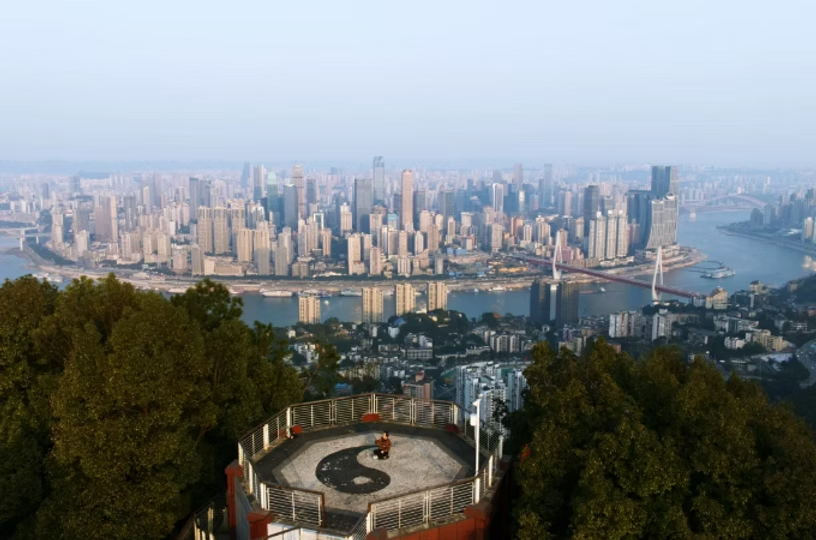
Chongqing is the only major Chinese city built on mountains and split by two giant rivers. Locals call it the “8D City” because maps fail here. You walk into a building on the 1st floor, take an elevator to the 22nd, and step out onto another street at ground level.
The food is unapologetically spicy, the night views look like a cyberpunk film, and the old neighborhoods still breathe with daily life. Plus, Chongqing is one of China’s designated visa-free transit ports—citizens from 50+ countries can enter without a visa for up to 240 hours with an onward ticket.
For travelers deciding between Chongqing vs Chengdu for a first trip to western China: Chengdu is flatter, slower, and more polished—great for pandas and teahouses. Chongqing is steeper, spicier, and more intense. If you love dramatic cityscapes and don’t mind getting lost on staircases, come here first.
Best Time to Visit Chongqing
- Spring (Mar–May): Mild and green. Perfect for walking the mountain trails, but bring an umbrella—Chongqing rain loves surprise visits.
- Summer (Jun–Aug): Brutally hot and humid. Locals joke that you can fry an egg on the sidewalk. Hotel prices drop, but you’ll sweat through everything.
- Autumn (Sep–Nov): The best season. Clear skies, pleasant temperatures, and the Wushan red leaves arrive in late October.
- Winter (Dec–Feb): Gray and damp, but fewer tourists and hotpot tastes even better. Bring a jacket.
Avoid Chinese New Year, Labor Day (May 1–5), and National Day (Oct 1–7)—the city turns into a human traffic jam.
Best time overall: late September to early November.
Top Things to Do in Chongqing
Iconic City Sights
Hongyadong (洪崖洞)
A multi-story stilt-house complex clinging to the cliff. Go at night when the lights turn it into a glowing fantasy. You can see the best drone light show over the river from outside. Pro tip: don’t buy snacks from vendors right outside Hongyadong—walk one block further and pay half the price. For the full lowdown on the drone shows and night sky experiences, read our [Chongqing drone light show guide].

Jiefangbei (解放碑)
The city center monument surrounded by malls and snack streets. It’s the most convenient base for first-timers.

Liziba Station (李子坝轻轨站)
The famous station where the metro runs through the 6th to 8th floors of a residential building. The first time I stood below it, I stared for 20 minutes—my brain refused to accept a train going through a wall.

Nanshan Yikeshu / Dajinying (南山一棵树/大金鹰)
Two classic viewpoints. Yikeshu is the postcard view; Dajinying is higher, quieter, with a 360° panorama. For a photographer’s full list of angles and hidden spots, check our [best photography spots in Chongqing].

Shibati (十八梯)
A restored old stairway district connecting the upper and lower city. Tourist-friendly, but still shows old Chongqing’s vertical lanes.

Xiahaoli-Longmenhao (下浩里-龙门浩老街)
Two adjacent historic neighborhoods on the south bank with riverside cafes and old consulate buildings. Less crowded than Hongyadong and perfect for sunset.

Culture & Heritage
Huguang Guild Hall (湖广会馆)
A Qing-dynasty complex built by migrants from Hubei and Hunan. The carved wooden halls are underrated. Walk inside and you can almost hear the merchants negotiating.

Ciqikou Ancient Town (磁器口)
A thousand-year-old porcelain port, now filled with tourists and snack stalls. It’s worth a quick visit, but if you want quieter ancient towns without the crowds, see our [hidden ancient towns near Chongqing] guide.

Three Gorges Museum (重庆三峡博物馆)
Free museum opposite the Great Hall of the People. Covers the Yangtze Three Gorges, wartime capital history, and the dam’s impact. Good for understanding why Chongqing matters.

Luohan Temple (罗汉寺)
A Song-dynasty temple hidden among skyscrapers. The Hall of 500 Arhats is the highlight. The contrast between incense smoke and high-rises is surreal.

Day Trips & World Heritage
Dazu Rock Carvings (大足石刻)
A UNESCO World Cultural Heritage site about 1.5 hours from downtown. The Thousand-Hand Guanyin and reclining Buddha are breathtaking. Chongqing day trip to Dazu is one of the best ways to add culture to a transit stop. Need help arranging transport? Book a private driver ahead of time.

Wulong Karst (武隆喀斯特)
A UNESCO World Natural Heritage site with three massive natural bridges and the Longshuixia fissure gorge. You can visit as a long day trip or overnight. Many travelers combine Chongqing private tour options to cover Wulong without stress.

Wushan Three Gorges (巫山三峡)
Take a ferry or hike along the Yangtze through Wu Gorge. Autumn is spectacular with red leaves and misty peaks. For a full breakdown of the cruise options, consult our [Three Gorges cruise guide].

Baidicheng (白帝城)
Historic Three Kingdoms site, famous from poetry and the 10 RMB note. Combine with a hike to the Three Gorges Summit for panoramic views.

Chongqing Local Food Guide
Chongqing food is hot, numbing, and bold—the signature taste is “málà” (麻辣). But it’s not all spice; many dishes are rich, savory, and complex.
The must-try list includes:
- Chongqing Hotpot (重庆火锅) – communal boiling red broth with tripe, beef, and vegetables.
- Chongqing Xiaomian (重庆小面) – spicy noodles tossed with chili oil and a dozen seasonings.
- Suān Là Fěn (酸辣粉) – chewy sweet potato noodles in a tangy, numbing broth.
- Chāoshǒu (抄手) – wontons in chili oil or clear soup.
- Máoxuěwàng (毛血旺) – blood curd, tripe, and intestines in fiery red broth.
- Yóuchá (油茶) – old-school breakfast of thick rice paste with crispy dough and peanuts.
- Bīngfěn (冰粉) – cooling sweet jelly dessert that rescues your tongue after a spicy meal.
For a serious dive into where locals actually eat, check our [Chongqing food guide] with the best local restaurants & bars. And if you’re still unsure about the difference between Chengdu and Chongqing hotpot, read our [Chongqing hotpot vs Chengdu hotpot] guide before you order.
How to Get to & Around Chongqing
Arriving in Chongqing
By air: Chongqing Jiangbei International Airport (重庆江北国际机场) has direct flights from many Asian cities and a growing list of long-haul routes. Metro Line 10 reaches the city center in about 50 minutes.
By rail: Chongqing North Station (重庆北站) is the main high-speed rail hub—Chengdu 1.5h, Xi’an 5h, Guiyang 2h. If you have trouble with online ID verification for train tickets, see our [12306 ID verification guide for foreigners].
Visa-free transit: Citizens from over 50 countries can enter Chongqing without a visa for up to 240 hours (10 days) with a confirmed onward ticket to a third country. The clock starts at midnight after your entry day.
Getting Around the City
Metro: Fast and cheap. Lines 1, 2, 3, and 6 cover most tourist spots. Fares ¥2–7.
Taxi / Didi: Didi works with English interface and is my go-to in steep neighborhoods.
Navigation: Google Maps is unreliable in China. Use Amap (高德地图)—it has an English version and accurate walking, metro, and bus routes. For the complete setup walkthrough, see our [Amap English setup guide].
River transport: You can cross the river by ferry for a local experience or take a tourist cruise for the night views. Not sure which is worth it? Read our [Two rivers cruise & ferry comparison] before you book.
Sample Chongqing Itineraries
24-Hour Classic Highlights
Stay in Jiefangbei and walk:
- Morning: Jiefangbei → Luohan Temple → Hongyadong (outside)
- Afternoon: Liziba Station → Ciqikou
- Evening: Hotpot dinner → river view from Nanbin Road
3-Day Classic City + Food
Day 1: Arrive, explore Hongyadong, Shibati, and the night view from Jiangbeizui Riverside Park.
Day 2: Liziba, Three Gorges Museum, People’s Great Hall, Shancheng Trail, then hotpot.
Day 3: Nanshan viewpoint for panorama, then Xiahaoli-Longmenhao old streets before departure.
144-Hour (6-Day) Heritage & Nature Combo
- Days 1–2: Classic city sights (Hongyadong, Jiefangbei, Liziba, Shibati, night views)
- Day 3: Dazu Rock Carvings (overnight in Dazu or return)
- Day 4: Wulong—Three Natural Bridges and Longshuixia Fissure
- Day 5: Return to Chongqing, relax, hotpot
- Day 6: Depart
Traveler note: “The Amap setup guide saved me hours. My first hour in Chongqing felt like a maze until I followed the routes.” — Sarah, USA
Planning your exact route? My 144-hour Chongqing heritage itinerary has day-by-day plans with one-click Amap navigation. Grab the full [144‑hour Chongqing heritage itinerary] here. Need a private driver for Dazu or Wulong? We work with local drivers who know all the shortcuts. [Contact us for Chongqing private tours].
Practical Tips for Foreign Visitors
- Payment: Set up Alipay before arrival and link a foreign credit card. Keep ¥200–300 cash as backup. Some tiny vendors only take WeChat Pay.
- Language: English is rare outside major sites. Download a translation app—Alipay has a built-in translator.
- Internet: Google/Facebook/WhatsApp are blocked. Use an eSIM with VPN or local SIM + VPN. Install VPN before arriving.
- Safety: Very safe overall. The biggest risk is slipping on steep wet stone steps—wear grippy shoes.
- Where to stay: Jiefangbei is most convenient. Nanbin Road has better river views and is quieter. Avoid bar street if you sleep lightly.
- Relax: After all those stairs, you might want a soak. See our picks for [Chongqing bathhouses & hot springs]—locals’ favorites, not tourist traps.
- Shopping: For electronics or local goods without the tourist markup, read our [local shopping guide in Chongqing].
Setting up payments and navigation is the most annoying part of a China trip. Our free Chongqing travel toolkit has step-by-step setup guides and offline maps. [Download the free Chongqing travel toolkit].
Chongqing Travel FAQ
Q: Is Chongqing worth visiting?
A: Absolutely. It’s one of China’s most visually striking cities—giant bridges, cliffside buildings, and a unique mountain-river landscape. Add the food and visa-free access, and it’s a no-brainer.
Q: How many days do you need in Chongqing?
A: Three full days for the main city sights and food. Add 5–6 days if you want Dazu or Wulong.
Q: What is Chongqing most famous for?
A: Hotpot, 8D terrain, Hongyadong, the Yangtze River, and being one of China’s largest municipalities.
Q: Can I visit Chongqing without a visa?
A: Yes, if you’re from one of the 50+ eligible countries and hold a confirmed onward ticket, you can stay up to 240 hours (10 days) under the visa-free transit policy.
Q: Can I use Google Maps in Chongqing?
A: No, Google Maps is unreliable. Use Amap (高德地图) instead—it has an English version and works well.
Q: Is Chongqing safe for foreign tourists?
A: Yes, violent crime is extremely rare. Watch out for steep steps and slippery stones after rain.
Q: What food is Chongqing famous for?
A: Hotpot, xiaomian, sour and spicy noodles, wontons in chili oil, and máo xuě wàng are the icons.
Still have questions? Browse our [Chongqing food guide] or [Amap English setup guide] for more local tips. Or if you’re ready to explore beyond the city, check our [Chongqing private tour] options for Dazu and Wulong day trips with a local driver.
Final Thoughts: Is Chongqing Worth the Trip?
I was born in Chongqing and have lived here for over 30 years, and it still surprises me. It doesn’t try to be conventionally pretty—it’s raw, vertical, and full of contradictions. But that’s exactly why travelers remember it.
If this guide helped you, check out our other Chongqing guides, including the complete [Chongqing food guide], the [Amap English setup guide], and the premium [144‑hour Chongqing citywalk itinerary]. Don’t forget to download our free Chongqing travel toolkit for offline maps, translations, and food menus.
Happy exploring—and remember: when the map says you’re on the ground floor, you might actually be on the roof.


